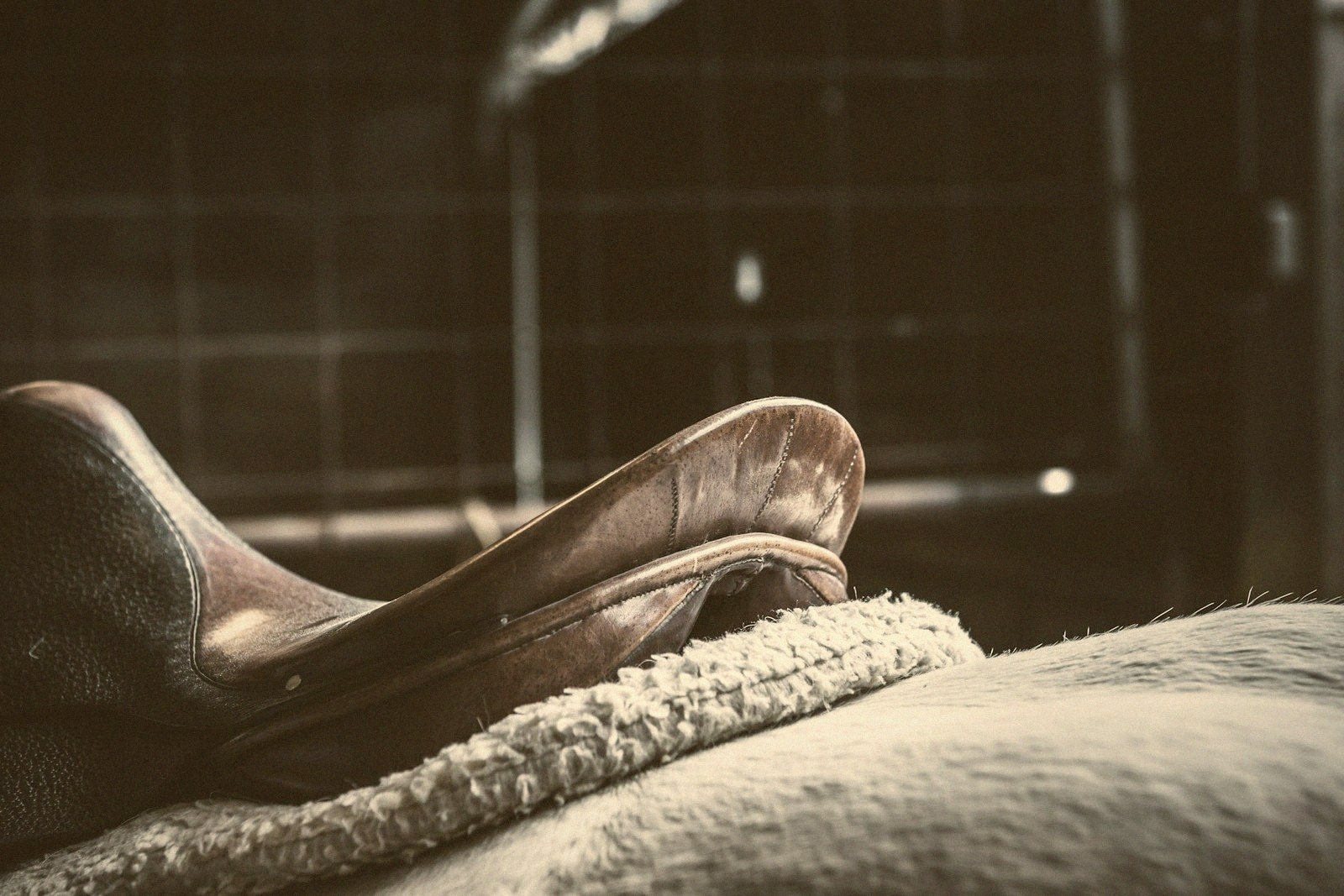
Eight parts that shape every ride — and why the fit you check today may not be the fit you need next season.
§ 01The Parts, Named and Explained
The saddle looks like a single object. It isn't. It is a system of connected components, each doing a specific job, and knowing their names lets you talk clearly to your saddler, your instructor, and yourself.
Pommel. The raised front arch of the saddle. On an English saddle it is relatively low and streamlined; on a Western saddle it becomes the prominent horn, originally designed for dallying a lasso. The pommel must clear the horse's withers — you should be able to fit two to three fingers between them when a rider is seated.
Cantle. The upswept rear of the seat. It gives the rider a back wall to sit against, adding security without forcing a fixed position. A high cantle (common in Western saddles) offers more support; a shallower one (typical in close-contact jumping saddles) allows freer movement through the hip.
Seat. The riding surface between pommel and cantle. Its depth and shape influence how naturally you find a balanced position. A deep seat suits dressage and Western work; a flatter, forward-cut seat suits jumping, where you need to fold and follow.
Tree. The internal skeleton everything else is built on. Traditionally made from beech wood and steel; modern trees use fibreglass, carbon fibre, or flexible polymers. The tree's width and angle determine whether a saddle fits a particular horse's back — a narrow tree on a broad-backed horse creates pressure at the points; a wide tree on a narrow horse rocks and pinches. Trees come in standard width categories (narrow, medium, wide, extra-wide), though sizing is not standardised across manufacturers.
Gullet. The channel running the length of the saddle's underside, between the two panels. Its job is to keep pressure off the horse's spine and the ligaments running alongside it. A correctly fitted saddle keeps the gullet clear along its entire length, even when a rider's weight is in the seat. This is one of the most important clearances to check — and one of the easiest to see if you look straight through from front to back with the saddle on the horse.
Panels. The padded cushions on either side of the gullet that bear the rider's weight and distribute it across the horse's back. Panels may be flocked with wool, foam, or air-filled. Wool flocking compresses over time and needs periodic re-flocking — a job for a qualified saddler.
Flap. The large outer panel your leg hangs against. Its cut — the angle and length — should match your discipline and your leg length. A flap cut too far forward tips you into a chair seat; one too straight tips you behind the movement.
Stirrup bars. Metal fittings recessed into the tree beneath the skirt, from which the leathers hang. They carry a hinged safety catch, which should ride open during normal work so that a leather can pull free in a fall. Many riders leave it permanently open. It is a small detail worth checking on any unfamiliar saddle.
The back that filled a medium-wide tree in summer may sit differently by December, and a young horse in training can transform within months.
§ 02Why Fit Is Never Finished
A horse's topline changes with fitness, age, season, and workload. The back that filled a medium-wide tree in summer may sit differently by December, and a young horse in training can transform within months. A saddle that fits well one year can become a source of subtle, consistent discomfort the next — showing up as resistance, back soreness, or changes in way of going long before it shows up as an obvious pressure mark.
The standard professional advice is a saddler's assessment at least once a year, and any time your horse's shape, work level, or behaviour shifts noticeably. The saddle is not a one-time purchase decision. It is a relationship that needs checking.