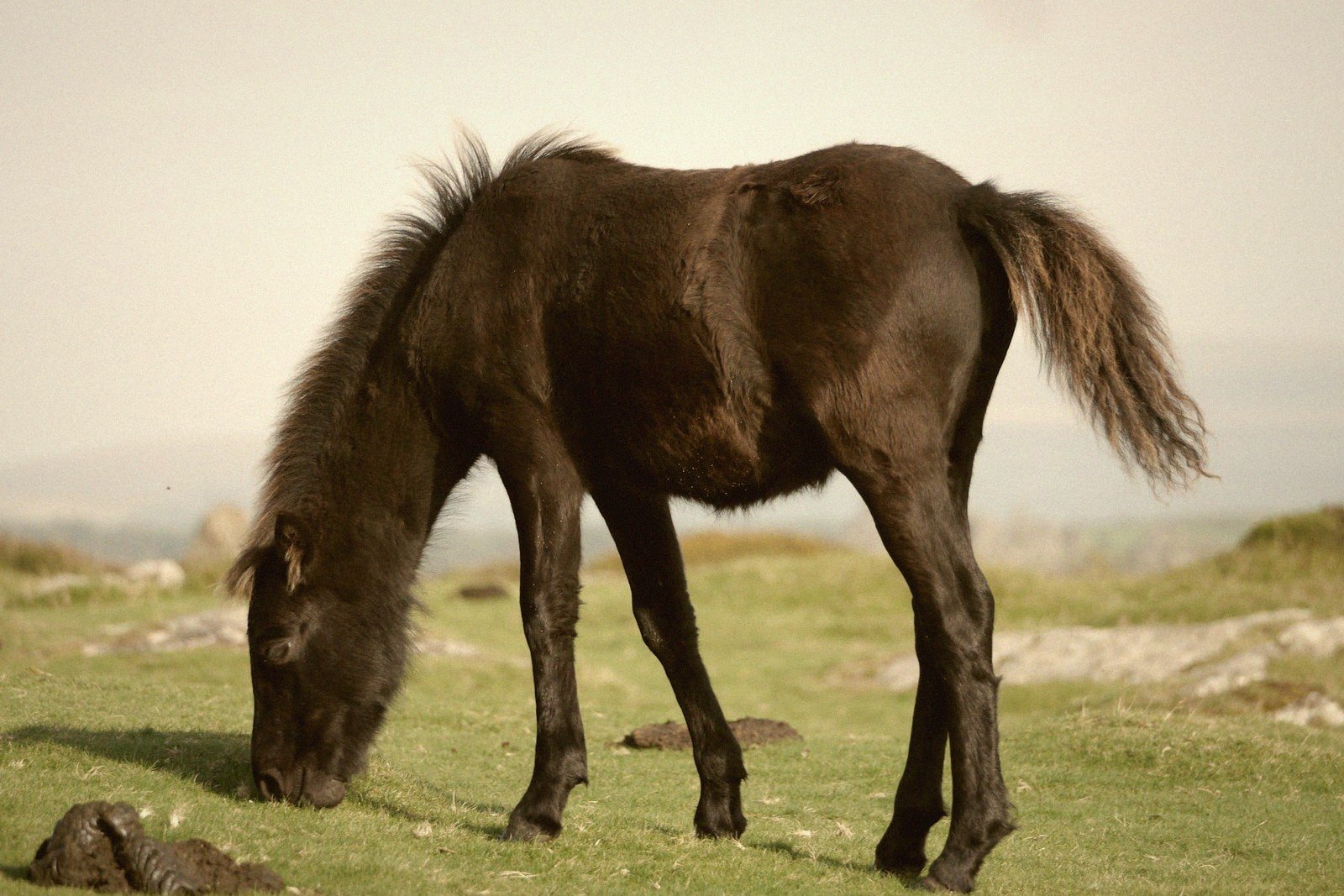
The distinction isn't size — it's substance. Native pony breeds carry centuries of hard country in their bones.
§ 01Built by a Different World
Measure a Dartmoor pony at the withers and you might call it small. Spend a winter with one on an exposed Devon moor and you'll call it something else: efficient, tough, and perfectly engineered for a landscape that would hollow out a less adapted animal. The difference between a pony and a horse isn't simply a matter of standing under 14.2 hands. It runs deeper — through bone density, metabolism, hoof quality, and the particular intelligence that comes from surviving without human help.
Native breeds developed in geographic isolation across centuries. The Norwegian Fjord, the Exmoor, the Highland, the Connemara, the Shetland, the Welsh — each carries the imprint of its homeland in its conformation. Broad foreheads, dense flat bone, thick manes and tails, small hard feet: these aren't coincidences of breeding fashion. They are adaptations, selected by cold, wet, poor grazing, and rough terrain across hundreds of generations.
That heritage produces a metabolism radically unlike a warmblood's. Native ponies extract more energy from rougher forage, which is exactly what kept their ancestors alive on hillside grazing in February. In domestic management, this efficiency becomes a challenge: laminitis is a persistent risk when ponies access rich modern pasture. Strip grazing, low-sugar hay, and careful monitoring of spring grass are not optional extras for native pony owners — they are the management baseline.
The intelligence argument is harder to quantify but impossible to dismiss. Ponies raised in semi-feral herds — Exmoors on Exmoor, New Forest ponies running in the Forest — develop problem-solving skills and social literacy that more intensively managed animals often lack. They read their handler's intentions quickly, notice inconsistency sooner, and remember both lessons and experiences with remarkable clarity. Whether you interpret this as cleverness or stubbornness depends largely on how well you ride.
Native pony breeds sit at the foundation of equine heritage in Britain, Ireland, and Scandinavia, and several remain on conservation watch lists. The Rare Breeds Survival Trust monitors UK native breeds and supports studbooks that help prevent genetic erosion in small populations. Owning a registered native pony is, quietly, an act of conservation — as well as an education in what horses were before we decided to improve them.
The difference between a pony and a horse isn’t simply a matter of standing under 14.2 hands.