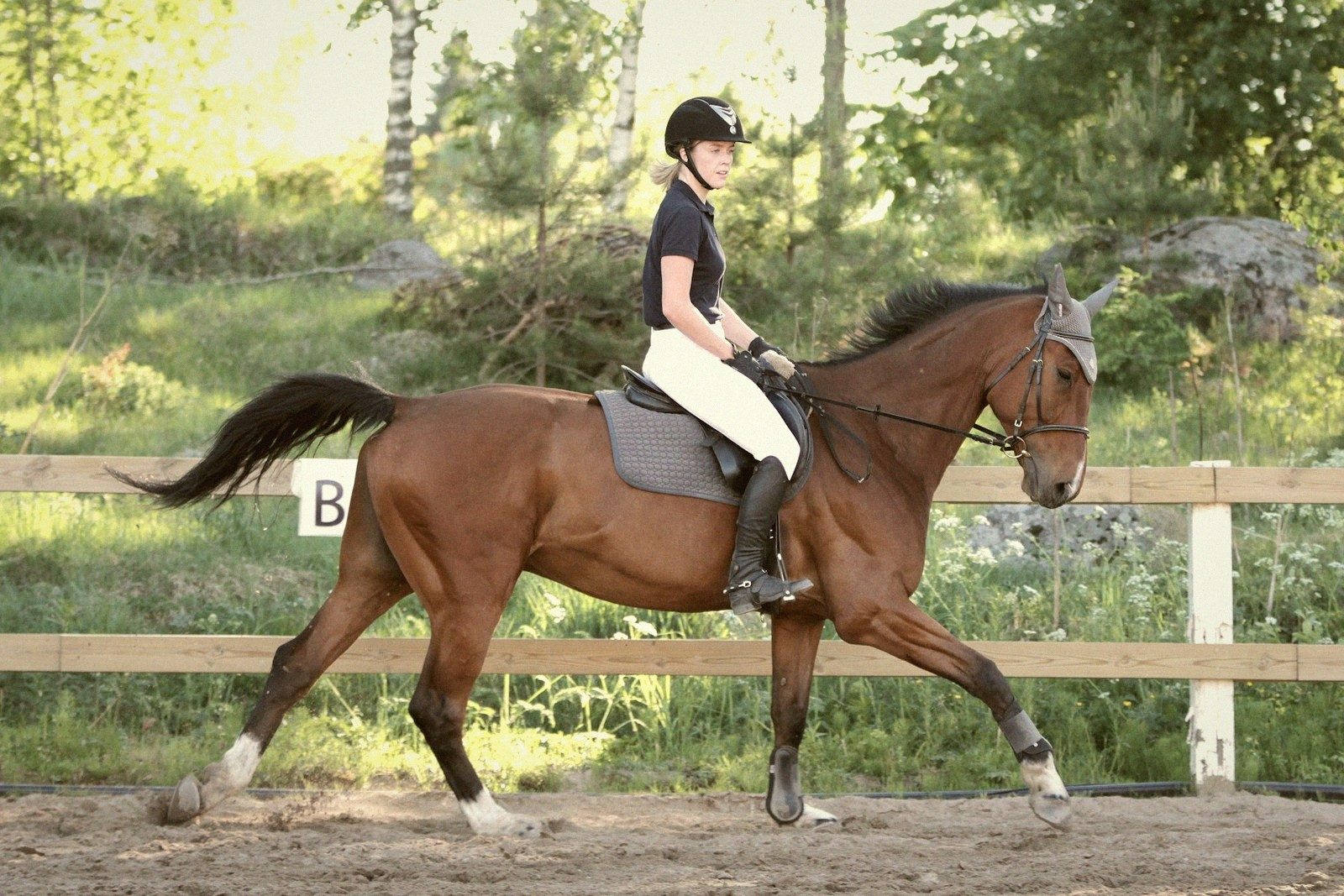
Not a breed — a philosophy: how European studbooks engineered the modern sport horse.
§ 01What "Warmblood" Actually Means
The word trips up newcomers almost every time. A warmblood is not a temperature, a temperament, or a single breed. It is a category — one that sits historically between the "cold blood" of heavy draught horses and the "hot blood" of Oriental breeds like the Arabian and the Thoroughbred. Those labels were never scientific; they were a shorthand European breeders used to describe disposition and build. Cold-bloods pulled ploughs. Hot-bloods raced and campaigned. Warmbloods, in theory, did both — or more precisely, they were bred to do whatever agriculture, cavalry, and later sport demanded at a given moment.
Today the term covers a loose constellation of European studbook breeds: the Hanoverian, Oldenburg, Dutch Warmblood (KWPN), Westphalian, Holsteiner, Trakehner, Swedish Warmblood, Danish Warmblood, Belgian Warmblood, and several others. Each has its own registry, its own brand, and its own breeding priorities. What unites them is a shared methodology rather than a shared bloodline — an open, performance-tested system designed to improve across generations with ruthless pragmatism.
§ 02The Studbook System: Open, Performance-Tested, Competitive
The defining feature of warmblood breeding is the open studbook. Unlike a closed registry — where only horses with two registered parents qualify — most warmblood books admit stallions and mares from outside their breed if those animals can improve the stock. That single decision changed European horse breeding fundamentally. It meant a Hanoverian mare could be put to a Thoroughbred stallion in one generation, then to a Trakehner the next, always chasing a performance ideal rather than a bloodline purity.
The other pillar is mandatory performance testing. A warmblood stallion does not earn breeding rights simply by being tall and handsome. In Germany — where the modern system was largely formalised — stallion approvals (Körungen) require candidates to pass a licensing inspection and then complete a performance test, historically lasting several months, in which their walk, trot, canter, jumping ability, rideability, and character are assessed under standardised conditions. The Hanoverian society has held approvals since the eighteenth century; the modern evaluation format, with centralised testing stations, took shape in the twentieth. Mares are similarly graded: a mare that earns the Staatsprämie (State Premium) designation in Germany has met strict thresholds for conformation, movement, and often progeny performance.
The result is a breeding apparatus that feeds on feedback. Olympic medals, grand prix rankings, and auction results flow back into selection decisions. A stallion whose sons and daughters collect dressage gold generates enormous stud fees and shapes the next generation's gene pool. This is breeding as engineering — iterative, data-informed, commercially motivated, and extraordinarily effective.
| Closed studbook | Open studbook | |
|---|---|---|
| Admission | Two registered parents, same breed | Outside stallions and mares admitted on merit |
| Goal | Preserve a fixed type | Chase a moving performance ideal |
| Breeding rights | Largely by pedigree | Licensing inspection + months-long performance test |
| Feedback loop | Show-ring fashion | Sport results, auction prices, progeny records |
This is breeding as engineering — iterative, data-informed, commercially motivated, and extraordinarily effective.
§ 03From Cavalry Mount to Arena Star
European warmblood breeding did not begin with sport. It began with war and agriculture. The Hanoverian, arguably the most famous warmblood studbook, traces to the Royal Stud at Celle in Lower Saxony, established in 1735 under King George II. Its early purpose was producing horses for the Hanoverian cavalry and for export to Britain, where the Elector of Hanover had recently become King of England. The horses of that era were heavier, coarser animals than today's Hanoverians.
The Trakehner has a similarly martial origin. Founded at the East Prussian Royal Stud of Trakehnen in 1732 by Frederick William I of Prussia, it became the primary supplier of cavalry remounts for the Prussian army. The breed's most haunting chapter is its near-extinction during the winter of 1944–45, when breeding stock was driven west ahead of the Soviet advance in what became known as the Trek — a journey of roughly 900 kilometres through ice and snow in which thousands of horses were lost.
The Holstein, bred in the Schleswig-Holstein region, has been documented since the seventeenth century and was for a long time the most sought-after coach horse in Europe. The Dutch Warmblood (KWPN — Koninklijk Warmbloed Paardenstamboek Nederland) formalised its modern registry in 1969, deliberately engineering a horse for postwar leisure and sport rather than farm work. The KWPN moved quickly and made bold crosses with Thoroughbred blood; within a generation it was producing horses that dominated the highest levels of show jumping and dressage.
The shift from military and agricultural utility to elite sport happened, broadly, in the decades after the Second World War. Mechanisation rendered the cavalry horse and the farm horse obsolete almost simultaneously. Breeding associations faced a stark choice: find a new market or shrink into irrelevance. They found the market in the growing amateur and professional sport horse world, and they adapted their selection criteria accordingly. Movement quality — the elasticity, rhythm, and ground-covering scope of the paces — became central to assessment in ways it had never been when horses were judged mainly on stamina and willingness to carry equipment.
- 1732Frederick William I founds the Trakehnen Royal Stud, East Prussia
- 1735Royal Stud at Celle established; Hanoverian breeding begins
- 17th centuryHolstein documented as Europe's premier coach horse breed
- 1969KWPN (Dutch Warmblood) modern registry formalised
- 1944–45Trakehner Trek; breed nearly lost in Soviet advance
§ 04Reading the Brand
Most major warmblood studbooks brand their registered horses, and the mark is worth learning to read. The Hanoverian brand is an ornate letter H. The Oldenburg carries an O with a crown. The Trakehner's symbol is a moose antler — the Elchschaufel — taken from the imagery of the original East Prussian stud. The KWPN brand is a stylised lion. Holstein uses a nettle leaf.
These brands do more than identify; they represent a quality guarantee, or at least a quality aspiration. A branded horse has been inspected and accepted into the registry. That does not mean every branded animal is exceptional — studbooks vary in their selectivity, and the warmblood market, like any market, rewards fashionable bloodlines sometimes more than objective quality. Buyers and trainers learn to look beyond the brand to the individual animal's scores, the performance records of its sire and dam, and the specific testing station results.
| Studbook | Brand mark | Known for |
|---|---|---|
| Hanoverian | Ornate letter H | The all-rounder; approvals at Celle since the 18th century |
| Oldenburg | O with a crown | Bold crosses, dressage movers |
| Trakehner | Moose antler (Elchschaufel) | The closed exception; refinement and blood |
| KWPN | Stylised lion | Postwar engineering; show-jumping dominance |
| Holstein | Nettle leaf | Europe’s old coach horse turned jumper |
§ 05What Makes a Modern Warmblood
The contemporary sport warmblood has been shaped so deliberately that its characteristics are almost predictable: a well-set, refined head; a long, arched neck; pronounced withers; a deep shoulder; a broad, muscular hindquarter; and limbs with good bone and clean joints. In movement, the ideal is power without tension, rhythm without stiffness, and what judges call Schwung — a German word describing the elastic transmission of energy from the hindquarters through the back and into the rein contact.
Temperament sits alongside conformation in selection criteria. The cavalry requirement for a horse that would hold steady under fire has quietly evolved into a demand for a horse that will hold steady in a filled arena, under lights, with a nervous amateur in the saddle. Modern warmbloods are bred to be rideable — genuinely tractable, willing, and tolerant — without the hair-trigger reactivity that makes a pure Thoroughbred demanding. The Arabian that underpins so much of the warmblood's quality is several generations removed; the fire is retained in the movement, largely filtered from the temperament.
Warmblood height runs typically between 15.3 and 17.2 hands, though many modern sport horses sit at the taller end of that range. The trend toward larger horses has been a source of debate within breeding circles, with some judges and breeders arguing that extreme size compromises the elasticity and longevity that made the warmblood formula work in the first place.
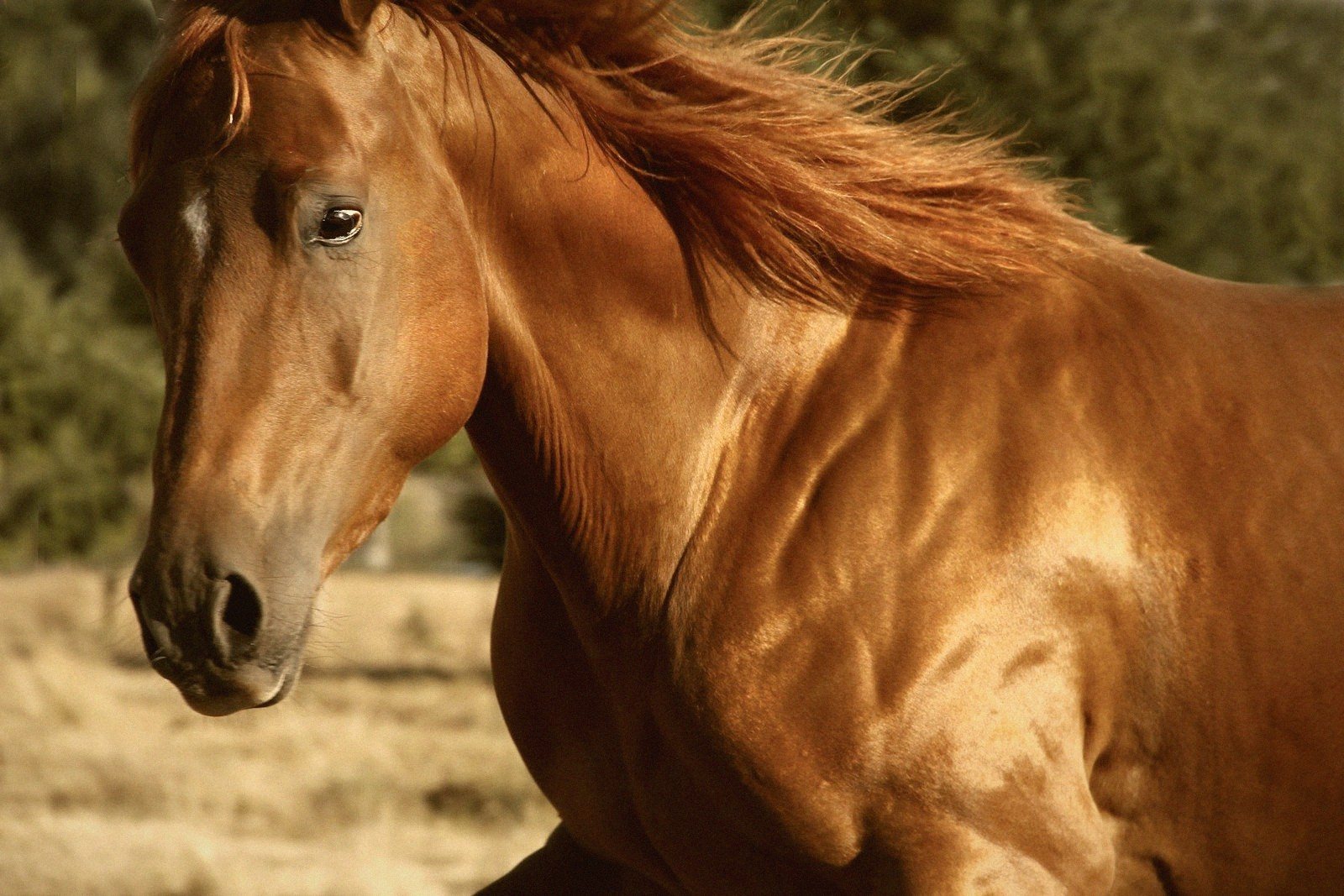
A “breed” is always a human construct, a snapshot of an ongoing negotiation between a population of horses and the demands we put on them.
§ 06Why It Matters Beyond the Arena
Understanding the warmblood system matters even for riders who never enter a competition. The same performance-testing logic that produces grand prix horses also produces the well-schooled riding horse in a suburban yard — more often than owners realise. Warmblood crosses and part-breds are widespread; many horses sold simply as "sport horses" carry warmblood registry papers or warmblood bloodlines without their owners knowing the details.
The system also illuminates a broader truth about breeds in general: that a "breed" is always a human construct, a snapshot of an ongoing negotiation between a population of horses and the demands we put on them. The warmblood made that negotiation explicit, turned it into a methodology, and demonstrated that horses could be systematically improved toward a moving performance target within a few generations. That is not a small achievement — and it is one that continues, each year, in every approval ring and performance test across Europe.
Frederick William I of Prussia
Founder · Trakehnen, 1732
Established the East Prussian Royal Stud that supplied the Prussian cavalry — and the Trakehner breed.
George II
Royal patron · Celle, 1735
Under his authority the Royal Stud at Celle opened in Lower Saxony, the heart of Hanoverian breeding.
KWPN
Studbook · Netherlands, 1969
Koninklijk Warmbloed Paardenstamboek Nederland — the registry that engineered the postwar sport horse.