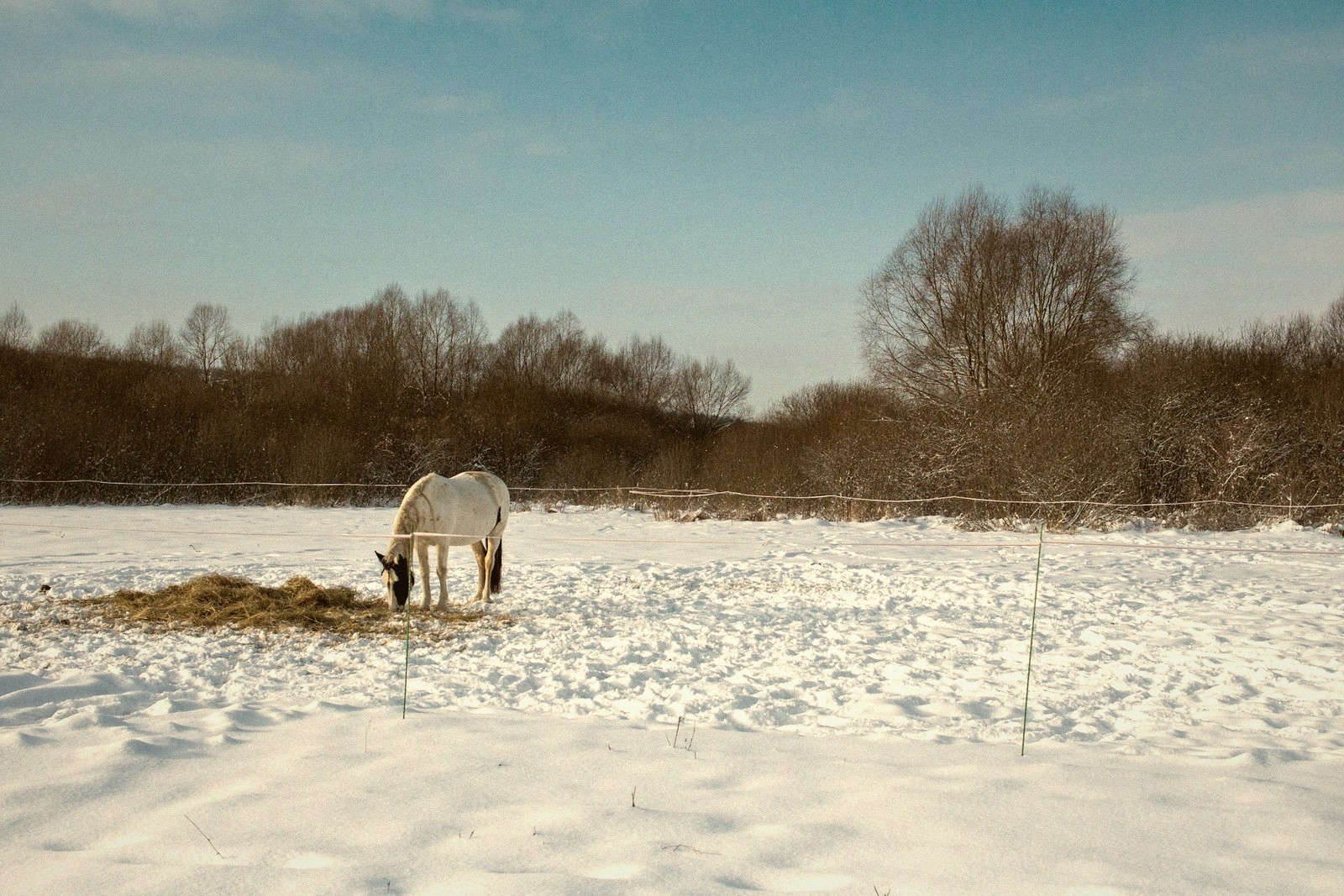
Cold, mud and short days don't have to mean misery — the horse wintered out is healthier for it, provided the basics are right.
§ 01The Case for Keeping Them Out
Horses are designed to move. Stabling through winter solves the human problem of a muddy, wet animal but creates equine ones: reduced gut motility, respiratory irritation from dusty bedding, and the compounding tension of confinement. A horse that lives out through the cold months — with good management — typically maintains better digestive health, steadier weight, and calmer behaviour than one that spends the dark months in a stable.
The critical word is management. Wintering out is not turning a horse loose and hoping for the best; it is an active, daily practice.
§ 02Shelter, Ground and Water
Shelter does not have to mean a field shelter, though a solid three-sided structure positioned with its back to the prevailing wind is the gold standard. Dense hedgerows and mature trees break wind effectively and horses will use them instinctively. What shelter cannot fix is standing water: hooves submerged in wet mud for hours every day invite mud fever — a bacterial skin infection caused largely by Dermatophilus congolensis — and white-leg swelling that can turn chronic quickly. A well-drained sacrifice area or hardcore pad at the gate gives horses somewhere firm to stand and eat, protecting the rest of the field from poaching.
Field maintenance matters more in winter than any other season. Rotate grazing if land allows; restrict access to the softest ground; and pick up droppings regularly to reduce worm burden and preserve what grass remains. Water troughs need daily checking — ice forms faster than people expect, and a horse that cannot drink enough will not eat enough, raising colic risk.
Water troughs need daily checking — ice forms faster than people expect, and a horse that cannot drink enough will not eat enough, raising colic risk.
§ 03Feed, Condition and the Rug Decision
Forage is the winter horse's central heating. Fermentation of fibre in the hindgut generates genuine warmth, so a horse with ad-lib good-quality hay is physiologically better equipped for cold than one kept on restricted rations. Condition scoring matters here: aim for a body condition score of around 5 on the Henneke nine-point scale going into winter. A horse carrying condition into October has reserves to draw on; one that enters winter already lean will struggle to maintain weight when cold and wet weather increase energy demand.
Whether to rug is the question owners agonise over most, and the honest answer is that it depends entirely on the individual horse. Breed and coat type, age, body condition and whether the animal has been clipped are the real variables — not the temperature alone. A native pony in good condition with an unclipped coat often needs nothing at all; a clipped Thoroughbred in the same field needs significant coverage. The rugging guide addresses this in detail, but the practical test is straightforward: run a hand under the rug or coat at the shoulder. Cold and clammy means under-rugged; damp and hot means over-rugged. Adjust accordingly.
§ 04Daily Checks and the Human Factor
Turnout does not mean absence of attention. A twice-daily check covers the basics: legs for heat or swelling, coat and eyes for anything new, and hooves — particularly in wet conditions where thrush and softening horn develop quickly. Hoof health through winter is heavily influenced by how long feet stay wet, so regular farrier cycles and prompt treatment of any sulcus blackening matter more than many owners realise.
Winter turnout asks more of an owner than a stable routine in some ways. The reward is a horse that arrives at spring fit, sane and — legs and lungs intact — ready to work.
§ 05From the field notes
General guidance for owners and riders — not veterinary advice. For anything beyond everyday husbandry, involve your own vet or farrier.