The signals are always running — you just have to learn the frequency.
Horses are prey animals wired to communicate continuously without making noise. They evolved in herds where silence was survival, so everything they feel gets expressed through the body: the angle of an ear, the set of a tail, the weight on a hindleg. Learn to read these signals fluently and you gain something close to a running commentary on your horse's emotional and physical state.
§ 01Start with the Ears
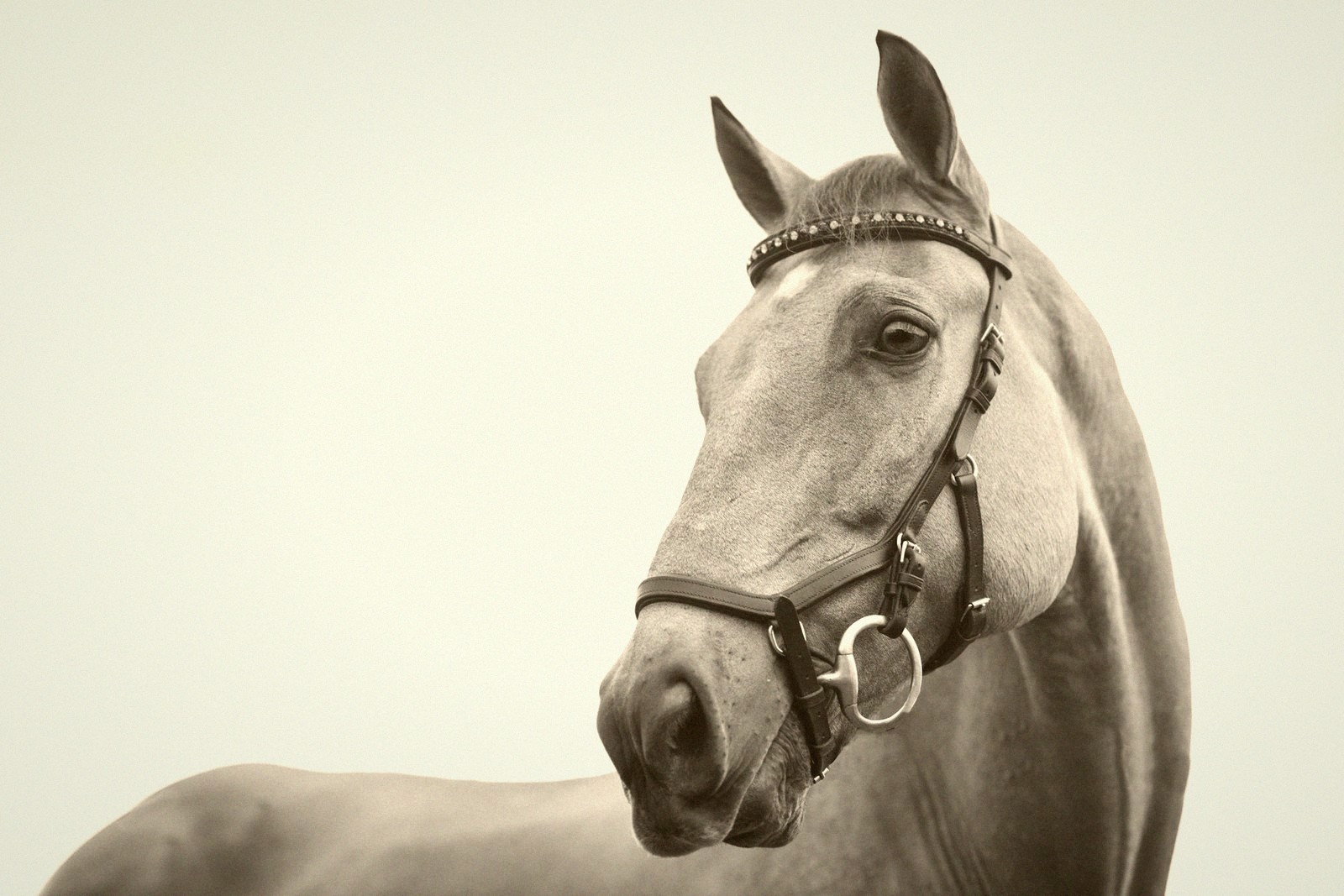
Ears are the most immediate, readable signal a horse sends. Pricked forward — rigid, pointing toward something ahead — indicates sharp attention or mild alarm; the horse is gathering information. Ears that swivel loosely, one forward and one back, suggest a relaxed, aware animal tracking multiple things at once. Soft, slightly drooped ears often accompany deep rest or genuine contentment, particularly when paired with a lowered head and slack lower lip.
Pinned flat ears are unambiguous: this horse is warning you. Whether the cause is pain, fear or irritation directed at a herd-mate, pinned ears signal that something is wrong and the situation could escalate. Treat it as information, not attitude — ask what prompted it before you ask the horse to comply.
§ 02Eyes, Nostrils and Mouth
A soft, half-closed eye with no visible rim of white indicates relaxation. The so-called "kind eye" that experienced horsemen describe is simply a large, dark, tension-free eye with no white showing. A hard, wide eye — white sclera visible, pupil dilated — means fear or high arousal. Some horses show white sclera naturally, so know your individual horse's baseline before you interpret.
Nostrils flared wide and stiff signal stress or exertion. Pinched, tight nostrils often accompany pain — veterinary research has confirmed this as a reliable pain marker and it features in formal equine pain-assessment tools, including the Horse Grimace Scale developed in the early 2010s. A loose, floppy lower lip typically means relaxation; a tight, pursed mouth often means the opposite. Repeated yawning can indicate tension release after stress or, if persistent, can point to gastric discomfort worth investigating.
Treat it as information, not attitude — ask what prompted it before you ask the horse to comply.
§ 03Tail and Posture
The tail is a reliable mood barometer. Carried high and flagged out behind — classic in Arabians and their descendants — signals excitement or high energy. Clamped tight to the quarters can indicate pain, fear or cold; a horse that suddenly clamps its tail during ridden work may be signalling back pain or discomfort from an ill-fitting saddle. A gentle, loose swish at insects is normal; rapid, aggressive tail-swishing in a ridden horse is a clear protest signal.
Posture tells you about rest versus readiness. A horse standing square and alert is engaged. A hind leg cocked with the hip dropped is the classic resting posture — entirely normal when alternated between legs and combined with other relaxed signals. The same posture held constantly on one leg, without switching, can indicate pain or a musculoskeletal issue in that limb and warrants closer attention.
§ 04Putting It Together
No single signal reads in isolation. Pinned ears with a soft eye and a lowered head during grooming might just mean this horse dislikes the brush on a ticklish spot — not aggression. Pricked ears with a high tail, tense nostrils and a stiff back mean something has genuinely frightened the animal. Read the whole picture.
The more time you spend with one horse, the richer your baseline becomes. What you're ultimately building is a reference for normal — so that subtle shifts register quickly, whether the cause is pain, stress or simply a plastic bag caught in the hedge. Horses communicate honestly and constantly. The effort is entirely on our side.
General guidance for owners and riders — not veterinary advice. For anything beyond everyday husbandry, involve your own vet or farrier.