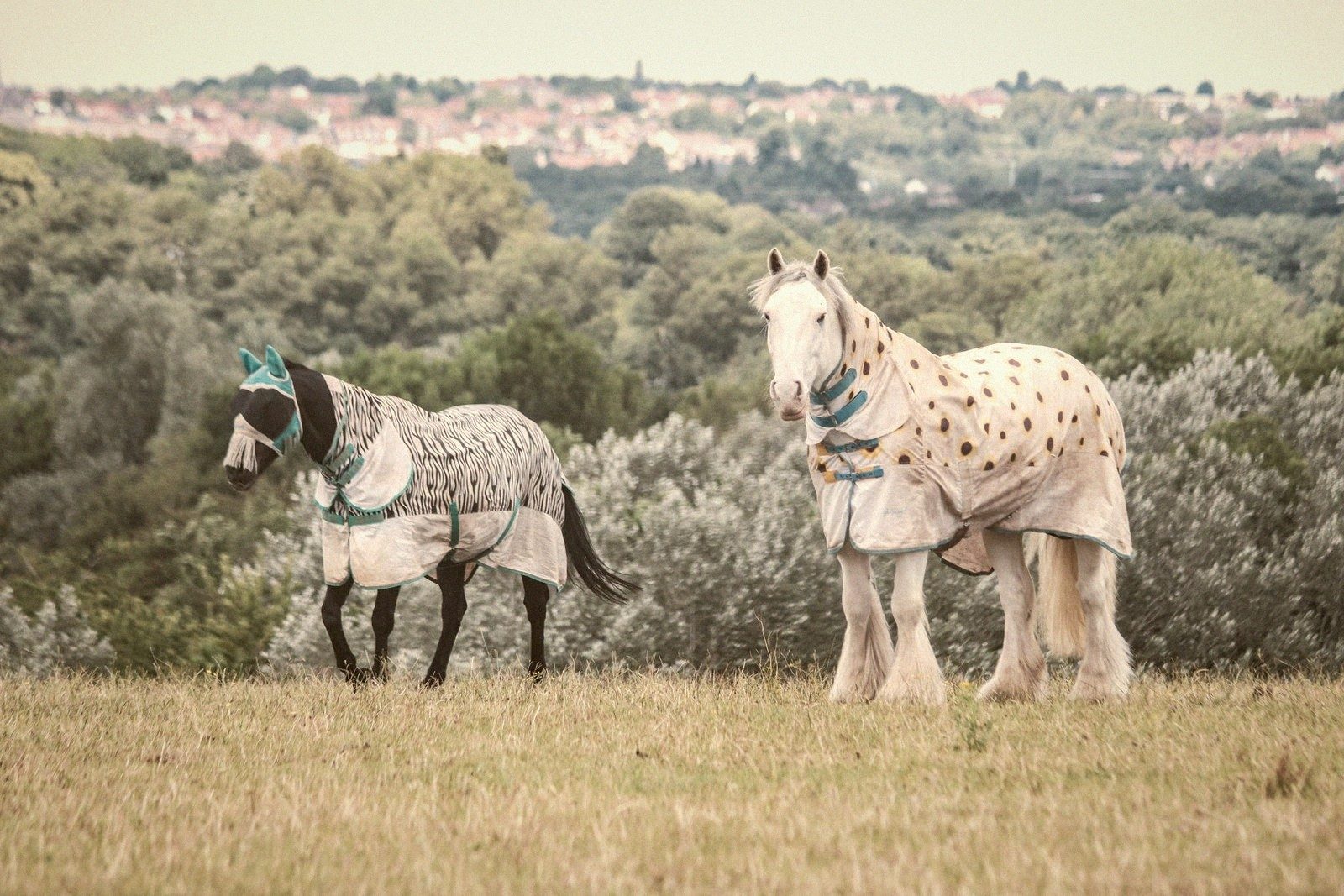
A rug doesn't equal care — knowing when to leave it off is just as important as knowing when to put it on.
§ 01Read the Horse, Not the Calendar
Temperature alone is a poor guide. A healthy, unclipped native pony in good condition, living out with companions, generates remarkable heat through digestion and movement — the same October evening that demands a medium on your clipped competition horse means nothing to him. Age shifts the calculation: veterans over twenty and youngsters under twelve months thermoregulate less efficiently and deserve more scrutiny. A horse that is underweight loses condition faster in the cold because there is simply less insulation to lose.
Clip is the single clearest trigger for rugging. Once you remove the coat — even a high trace — you've stripped the horse's own weatherproofing and taken on the obligation to replace it. A full clip in winter without adequate rugging is a welfare failure; a fully-coated horse smothered in a heavyweight on a mild October day is equally wrong, just less obviously so.
The honest test is tactile: push your hand under the rug at the shoulder. If the skin feels cold and damp, the horse is chilled and under-rugged. If it's hot and sweating, he's overheating and the rug needs to come off or be swapped for something lighter. Warm and dry is exactly right. Run that check every day — twice on days when the temperature swings.
A horse in good condition carries fat reserves that act as insulation; a lean horse in poor condition needs support earlier and more generously.
§ 02The Variables Worth Tracking
Condition. A horse in good condition carries fat reserves that act as insulation; a lean horse in poor condition needs support earlier and more generously.
Company. Horses huddled together share warmth. A horse kept alone loses that buffer and may need a slightly heavier rug than the herd would.
Access to shelter. A well-drained field shelter changes the equation significantly. Wind chill is the enemy; a horse out of the wind and rain copes with far lower temperatures than one standing exposed.
Breed type. A native pony breed evolved for wet, cold uplands will almost always need less than a Thoroughbred of identical weight.
Rugging charts circulating online offer a starting point, not an answer. Horses are individuals; the same rug on two horses in the same field can produce two different results. Check, adjust, and check again — that habit matters more than any formula.
§ 03From the field notes
General guidance for owners and riders — not veterinary advice. For anything beyond everyday husbandry, involve your own vet or farrier.